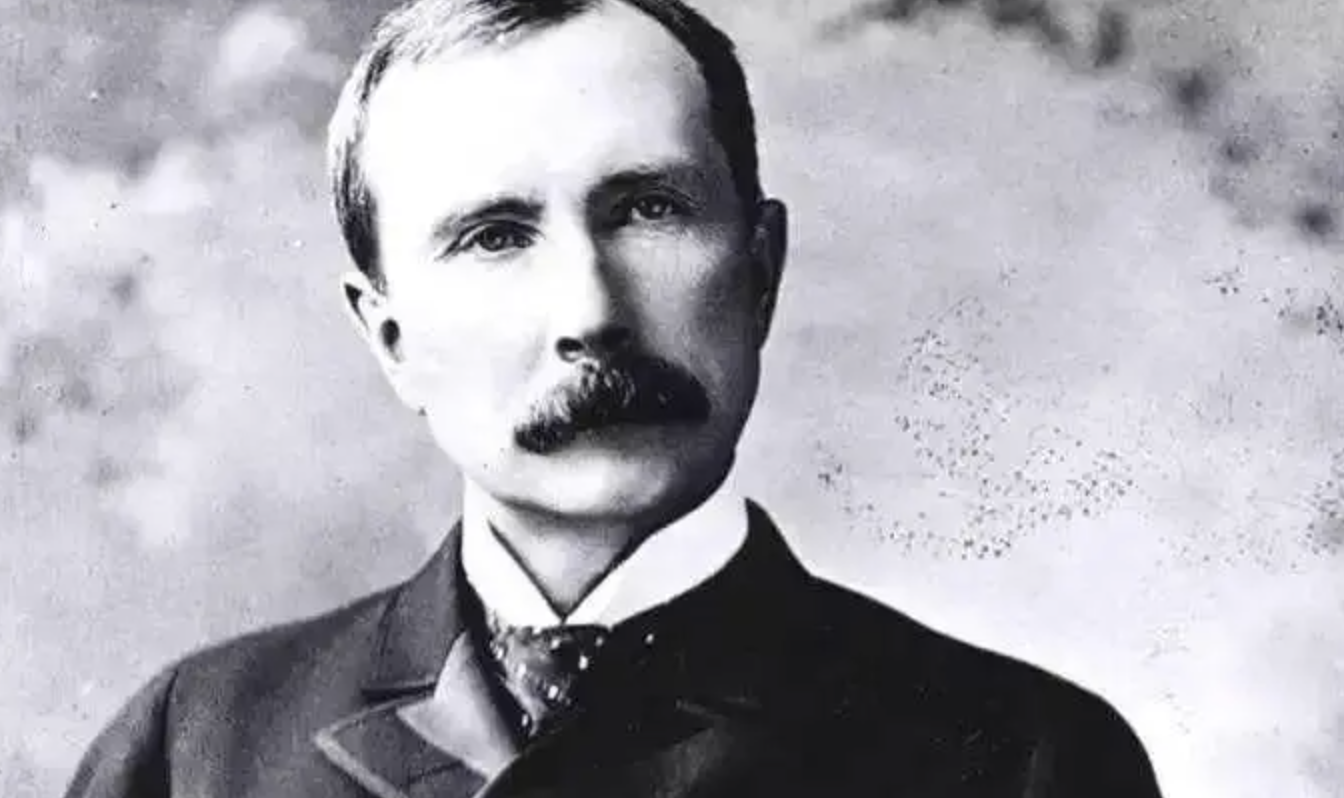



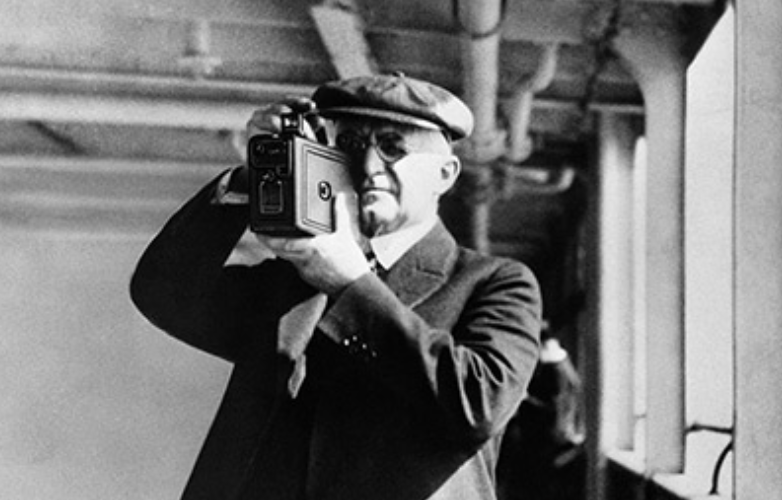
George Eastman (12 July 1854 - 1932) was a high school dropout who was regarded as a "no special talent" by the academic standards of the time. From a very young age, he took on the care of his widowed mother and two sisters, one of whom was severely handicapped, and at the age of 14 he began his career as a handyman in an insurance company, later taking a position in a local bank. His ability to overcome financial difficulties, his talent for organisation and management, and his dynamic and creative mind made him a successful entrepreneur by the age of about 25, leading his Eastman Kodak Company to the forefront of American industry.
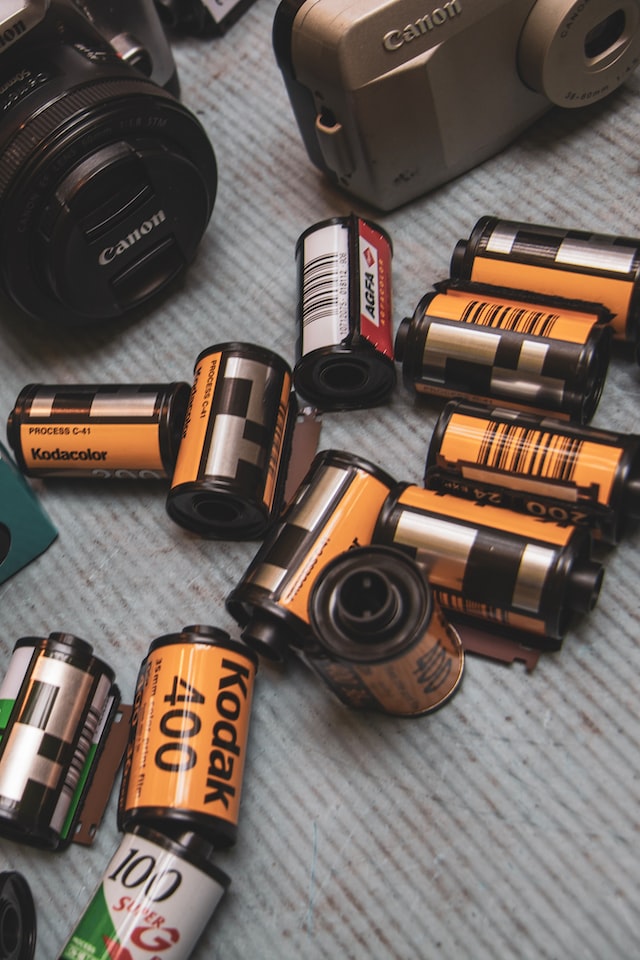
In April 1880, Mr Eastman rented the third floor of a building on State Street in Rochester and began manufacturing dry plates for sale. One of the first pieces of equipment he purchased was a second-hand engine worth $125.
"All I really needed was one horsepower," he later recalled. "It was two horsepower, but I thought maybe as the business grew, I would need two horsepower. It was worth a try, so I bought it."
Company growth
As the new company continued to grow, the company faced falling apart on at least one occasion, and that was when a dry plate went bad in the hands of a dealer. Mr Eastman recalled all those bad plates and replaced them with good products. "It cost us every last dollar to compensate for those plates," he says. "But what was left for us was even more important, and that was reputation."
"The idea came gradually," he said later, "that we would do more than make dry plates, but make photography a normal thing," or, as he described it more succinctly, "make the camera as as handy as a pencil".
Mr Eastman's experiments were directed towards the use of a lighter and more flexible film base than glass. His first method was to apply photographic emulsion to photographic paper, which was then mounted in a film holder. This film holder was used for framing cameras, replacing the glass film holder.
Company achievements
The first film advertisement in 1885 read "A new type of photographic film will soon be introduced which will prove to be an economical and convenient substitute for glass drying plates for outdoor and studio use".
In 1886, Eastman developed a roll of light-sensitive film, known as "Eastman Film", which ended the use of wet, heavy and fragile glass as a photographic negative.
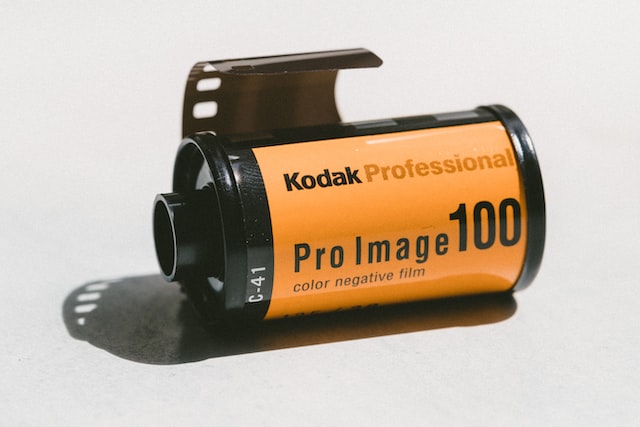
The system, which used film holders, was an immediate success. However, the use of photographic paper as a medium for emulsions was not entirely satisfactory, as there was a risk that the grain of the paper would reappear in the photographs.
Mr Eastman's solution was to apply a layer of simple soluble gelatine to the photographic paper, followed by a layer of insoluble light-sensitive gelatine. After exposure and development, the gelatine applied to the image is peeled off the photographic paper, transferred to a sheet of clear gelatine and then retouched with fire wool glue - a cellulose solution that creates a pliable film.
Social comment
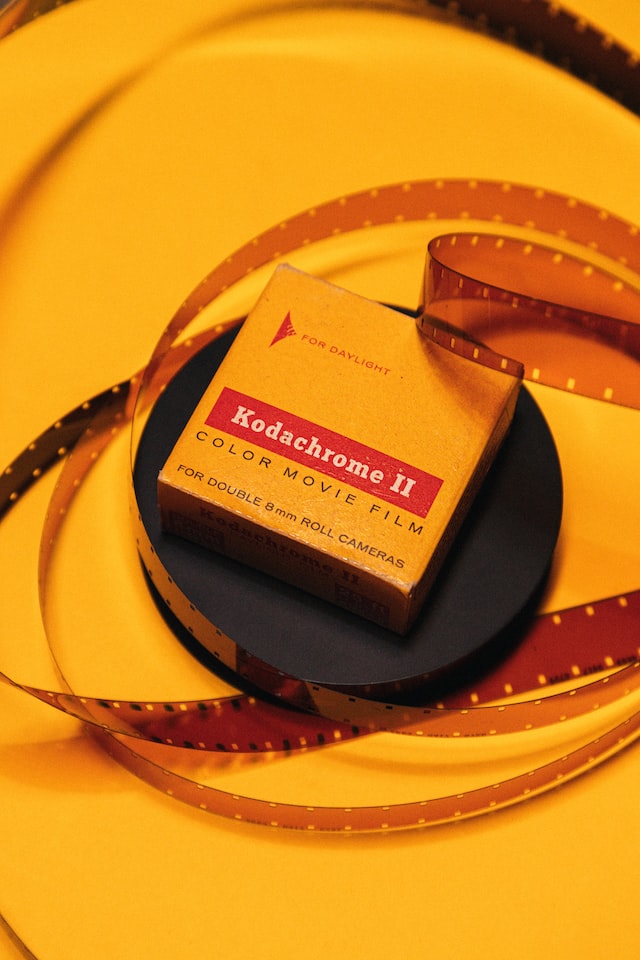
Mr Eastman changed the whole direction of his work while perfecting the clear film and film holder, and laid the foundations for his success in amateur photography.
He later said, "When we began our programme of film photography, we expected everyone who used glass film to switch to film. But we found that relatively few people did so. In order to expand our business, we had to get the support of the general public."
The invention did not satisfy Eastman; after all, the true 'mass market' of photography had not yet been achieved, and a family-oriented, portable home camera was his ultimate goal. Eastman devoted all his energy to improving the camera, working out how to make it smaller, lighter and more convenient. After countless failures, in 1886 Eastman's new camera was finally born! This was one of the great inventions in human history! At the same time, the most unusual feature of this camera was that when all the shots had been taken, the camera was sent to be developed in its original condition. This style and method of sale was epoch-making in the history of photography. This was the end of the use of horse-drawn carts to carry photographic equipment.
The birth of a new product
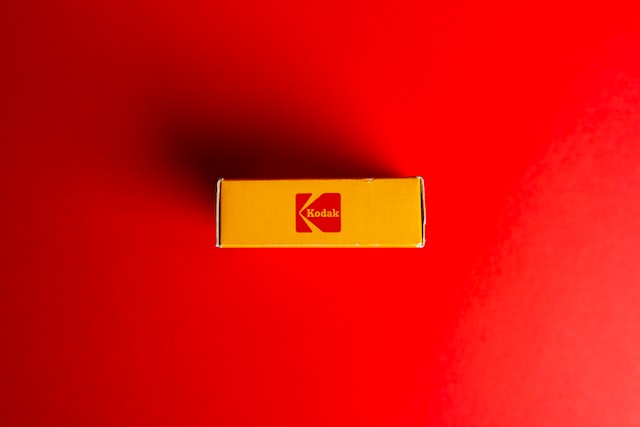
To come up with a chic name for his new product, Eastman thought long and hard and created a new word himself that had never existed before - 'Kodak', a name he later explained: "I came up with the name myself. The 'K' is my favourite letter, it's one of those letters that is iambic and catchy. But it became a problem to get the word to start and end with a 'K'. After many, many trials of letter combinations, I finally came up with 'Kodak'." Mr Eastman's choice of Kodak's distinctive yellow business look is world-famous and one of the company's most valuable assets.
In June 1888, the Kodak One, a small pocket camera, was finally introduced to the market, but things didn't start out so well, as the camera was new to the market and was virtually untouched when it was first introduced. Looking at this oddly shaped thing, people didn't believe it would produce good portraits, after all, traditional photographic equipment had dominated the market for so long. Besides, taking pictures has always been a pain in the arse and many people were afraid that they didn't have the skills to handle this new thing.
Faced with this situation, Eastman came up with a brilliant idea and placed an advertisement in the press with the slogan "You just push the button, we do the rest", which became a household word within a year. Advertising managers and agencies then competed to implement his concept, and magazines, newspapers, display cases and billboards were covered with the Kodak slogan.
In 1897, the word 'Kodak' was used in London's Trafalgar Square as a symbol for the 'Kodak girl', dressed in fashionable clothes and holding cameras that changed year after year, smiling at photographers from all walks of life. The electric sign shone brightly - one of the first such signs to be used in advertising.
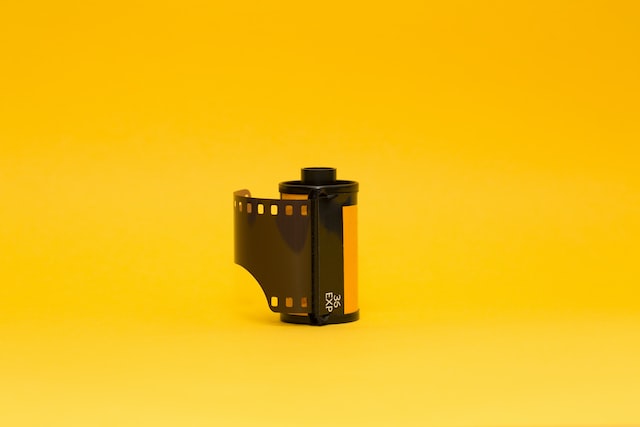
Today, the company's advertisements are seen all over the world and the "Kodak" trademark, created by Mr Eastman himself, is almost a household word.
In 1892, Eastman renamed the company "Eastman Kodak", and in 1895 Kodak took the world by storm with the launch of its $5 pocket camera - the dream of photographic technology "for The dream of making photography 'accessible to the masses' finally became a reality.